Garmin Fenix 9: What’s New in Garmin’s Flagship Multisport Watch
August 28, 2026 · 8 min read
Check price on Amazon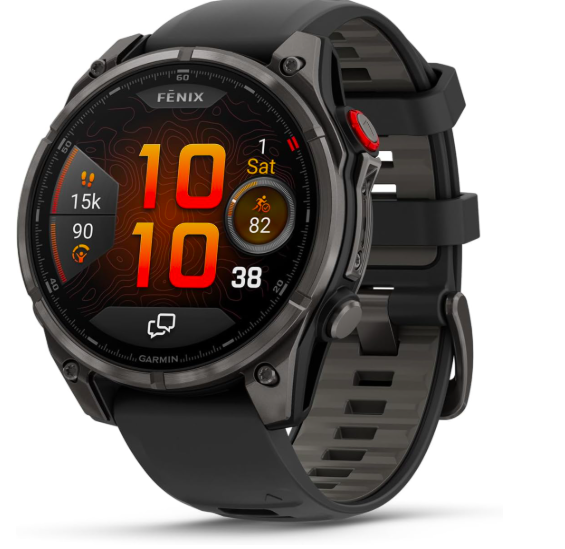
Garmin just expanded its flagship Fenix line with two new models: the Fenix 9 and the Fenix 9 Pro. Both watches build on everything that made the Fenix 8 a favorite among athletes and outdoor adventurers, then push the hardware and software further. More storage, a brighter screen, and a handful of genuinely new features make this one of Garmin’s most complete releases yet.
Here’s everything worth knowing before deciding if the Fenix 9 deserves a spot on your wrist.
Fenix 9 at a Glance
The Fenix 9 comes in three case sizes: 43mm, 47mm, and 51mm. All three run on an AMOLED display rated at roughly 2,000 nits of brightness, while the higher-tier Fenix 9 Pro models push closer to 3,000 nits. That’s a meaningful jump from the Fenix 8’s 1,000-nit peak, which should translate into much easier outdoor visibility in direct sunlight.
Storage has doubled to 64GB across the board, giving plenty of room for offline maps, music, and third-party apps. The rear case is titanium, and every model carries a 10 ATM water rating along with a depth sensor rated to 40 meters.
Battery life scales with case size. The largest 51mm model can run for up to 29 days in smartwatch mode or up to 42 days in low-power mode. The 43mm model, understandably, trades some endurance for its smaller footprint, landing closer to 10 days of smartwatch use.
What’s Actually New
A lot of the Fenix 9’s core hardware, including its Elevate Gen 5 heart rate sensor, carries over from the Fenix 8. Where this generation stands out is in software and a few thoughtful hardware additions.
- Garmin Epic. A new Garmin Connect feature that automatically compiles photos, health data, and performance highlights from a multi-day trip into one shareable recap once the adventure wraps up. It’s aimed squarely at hikers, cyclists, and expedition athletes who want a story, not just a spreadsheet of stats.
- ArcheryX. A dedicated activity profile built for archers, offering real-time shot-timing and aim-stability feedback. It’s a niche addition, but it shows Garmin still chasing corners of the sports market its competitors ignore.
- Rowing performance suite. The Fenix 9 can now estimate VO2 Max, FTP, power curves, power zones, and lactate threshold specifically from rowing sessions, when paired with a compatible rowing machine. This closes a gap that used to leave rowers with far less insight than runners or cyclists got by default.
- Stamina Curve and Stamina Zones. Building on Garmin’s existing real-time stamina tracking, this feature predicts how long a given pace or power output can be sustained, then converts that into five personalized effort zones for pacing during long efforts.
- Faster mapping engine. Garmin says the new engine pans up to 30% faster than the Fenix 8, and calculates round-trip routes up to 40% faster than the Fenix 8 Pro. For anyone navigating unfamiliar trails, that responsiveness matters more than the spec sheet suggests.
- Voice and connectivity. A speaker and microphone are built into every Fenix 9 model, enabling voice commands, an optional wake word, voice notes, and call handling on Pro inReach versions with an active satellite or LTE plan.
Fenix 9 vs. Fenix 9 Pro: What’s the Real Difference
All three tiers, standard Fenix 9, Fenix 9 Pro, and Fenix 9 Pro inReach, run the same software and share the same core sensor package. The differences come down to materials and connectivity rather than fitness or health features.
The standard Fenix 9 uses a fiber-reinforced polymer case with a titanium rear cover and bezel. The Pro models step up to a full titanium case and, in Solar variants, add solar charging for extended battery life, up to 57 days in the best case. Pro inReach models add built-in satellite messaging and phone-free LTE connectivity for backcountry safety, a feature that matters far more to off-grid adventurers than to everyday gym-goers.
Health and Training Tools Carried Over
Anyone upgrading from the Fenix 8 will recognize most of the health suite: sleep coach and sleep stages, HRV status, Body Battery energy monitoring, all-day stress tracking, respiration rate, heat and altitude acclimation, women’s health tracking, hydration tracking, and the Garmin ECG app for AFib detection. Training tools like training readiness, VO2 Max, real-time stamina, race predictor, PacePro, and ClimbPro all return unchanged.
In other words, the Fenix 9 isn’t reinventing Garmin’s health tracking; it’s refining the training and adventure tools layered on top of it.
Who Should Consider the Fenix 9
The Fenix 9 is built for people who take their training seriously: trail runners, triathletes, cyclists, hikers, and anyone who spends real time outdoors and wants a watch that can keep up for days without a charge. The jump in screen brightness and storage will matter most to people who already push their current watch to its limits.
Casual walkers or anyone mainly interested in basic activity tracking will likely find the feature set overkill. For that use case, a simpler Garmin model, or even a screenless tracker, covers the essentials without the learning curve.
Garmin Fenix 9
Check price on AmazonAffiliate link. Same price for you, small commission supports VitalHub.
Frequently asked questions
Gadgets · October 15, 2026
Garmin MARQ Gen 3 vs Fenix 9 Pro: Full Comparison
garminsmartwatchgpsReadGadgets · August 27, 2026
Garmin CIRQA vs Pixel Watch 5: Which One Tracks Better
fitness trackerwearablesmartwatchReadGadgets · October 12, 2026
Garmin Approach S72: Features, Battery Life & What's New
garminsmartwatchgpsReadGadgets · September 11, 2026
Apple Watch Series 12 vs Ultra 4: Which Should You Buy?
smartwatchwearablebatteryRead