Oura Health Radar Explained: What It Tracks & Who It's For
October 12, 2026 · 6 min read
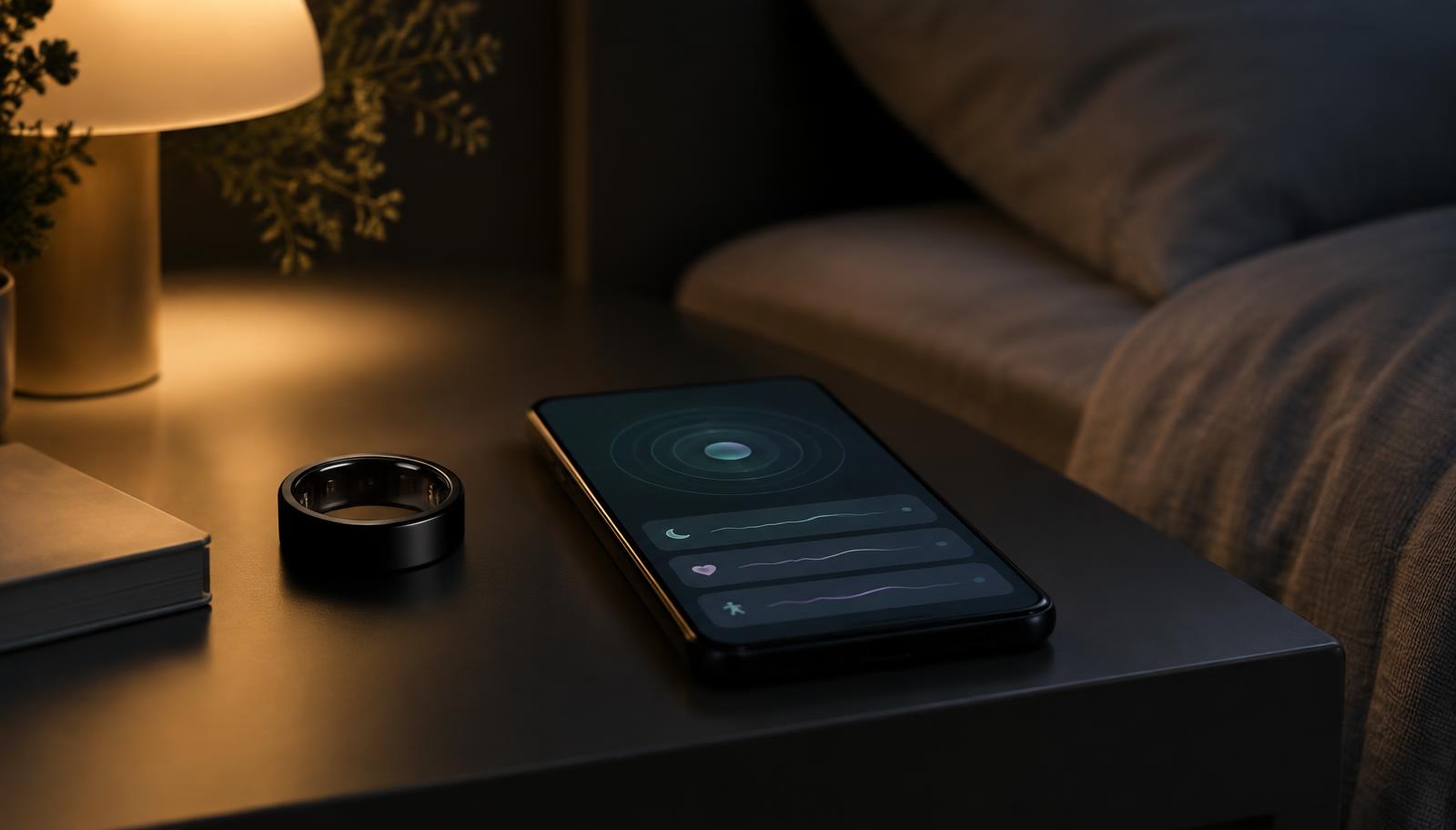
Most wearables show you numbers. Oura's Health Radar tries to do something different. It watches your data in the background and speaks up only when a pattern looks worth your attention.
It is built into the Oura app, it is switched on by default, and Oura is now expanding it to many more regions. This guide explains what it actually does, what it does not do, and whether it is worth caring about.
VitalHub has not independently tested Health Radar's accuracy. Everything below is based on Oura's own documentation and published coverage.
What is Oura Health Radar?
Health Radar is a dashboard inside the Oura app. It gathers three kinds of signals in one place:
- Short-term strain, through Symptom Radar
- Long-term breathing patterns, through Nighttime Breathing
- Long-term blood pressure patterns, through Blood Pressure Signals
It builds on Symptom Radar, which Oura launched in 2024. Oura says the newer features were developed with a large in-house team of physicians and researchers. Instead of making you check charts every morning, the ring learns your normal and flags the nights that do not fit.
The three features, explained
1. Symptom Radar: short-term strain
Symptom Radar compares your overnight readings with your own baseline: body temperature, breathing rate, resting heart rate and heart rate variability. The result is one of three labels: No signs, Minor signs or Major signs.
If it spots a shift, the app suggests you slow down and consider Rest Mode. It needs at least seven nights of sleep data in the past 14 days to work. Oura says its research found that temperature, breathing rate and HRV changed measurably before many people felt ill. That is Oura's claim. It does not mean the ring predicts illness.
2. Nighttime Breathing: the 30-day view
This tracks how steady your breathing is during sleep over a rolling 30 days, rated Steady, Mostly steady, Varied or Highly varied. It appears after about a week of data. If disruptions are frequent, the app can point you toward sleep health resources through a partner. Oura is clear that this is not a diagnosis — it is a prompt to talk to a professional if the pattern keeps showing up.
3. Blood Pressure Signals: the 30-day trend
This is the feature that gets the most attention, and the one most easily misunderstood. The ring does not measure your blood pressure. It never shows a reading in mmHg.
Instead, it studies the optical blood-flow signal collected overnight and looks for patterns over 30-day periods. If those patterns may point to cardiovascular strain, the app tells you. It needs at least 15 nights to build your baseline, and it only notifies you when something stands out. Two extras sit alongside it:
- Nighttime BP, which follows how overnight blood-pressure-related dipping changes over time
- Cuff readings, a log where you can add manual or imported cuff measurements, labelled against standard ranges. These do not affect any Oura score
If you want an actual blood pressure reading on your wrist, a different kind of device is needed. See our Huawei Watch D3 review for a watch that uses a real cuff.
What you need to use it
- An Oura Ring Gen3 or newer, including Ring 4 and Ring 5 (Gen2 and older are not supported)
- An active Oura membership
- The Oura app on iPhone or Android
- An up-to-date profile — the feature is tailored to your height, weight and sex assigned at birth
Availability depends on where you live, and Oura has been expanding it region by region. Check the My Health tab in the app to see if it is live for you. Everything turns on automatically during setup. You can switch individual features or all of them off at any time. Turning off Blood Pressure Signals hides your past data, and the 30-day assessment restarts if you turn it back on.
Where Health Radar shows up in the app
You will find it in the My Health tab, or in the menu. If Health Radar picks up a risk signal, it can cap a related My Health rating, such as Heart Health. A rating that drops is a reason to look at the Health Radar details, not to panic.
Limits and cautions
- It does not diagnose anything. It does not replace medical care.
- Symptom Radar can be wrong. It may warn you when you feel well, or stay quiet when you feel unwell.
- Pregnancy changes your baseline. Blood Pressure Signals is switched off automatically for members using Pregnancy Insights.
- Existing conditions may affect results. Oura notes it may not work well for people managing a heart condition.
- Your Readiness Score can disagree. Readiness may stay high while Symptom Radar shows strain, because they measure different things.
- A clinician's blood pressure reading comes first. If it differs from what Health Radar suggests, trust your clinician.
The published material also does not include accuracy figures or regulatory clearance details for the blood pressure and breathing features. Treat them as wellness tools.
Also rolling out: GLP-1 Insights
Alongside Health Radar, Oura is expanding GLP-1 Insights. It combines medication timing, logged side effects and weight changes with your sleep, readiness, activity and stress data in a single timeline. Oura describes it as an industry first.
Is Oura Health Radar worth it?
It makes sense if you:
- Already wear an Oura Ring Gen3 or newer
- Like the idea of a quiet background check instead of daily chart-watching
- Want a nudge to look at heart health or sleep breathing over the long term
It is not the right reason to buy a ring if you:
- Want a real blood pressure measurement
- Need a diagnostic tool
- Are looking for a device with no subscription
For the full comparison with other rings, read our best Oura Ring alternatives or see how Oura stacks up in Huawei Watch D3 vs Oura Ring 5 and Circular Ring 3 Pro vs Oura Ring 5.
Frequently asked questions
Affiliate disclosure: VitalHub may earn a small commission from qualifying purchases, at no extra cost to you. This article is based on Oura's published documentation and press coverage. We have not independently tested Health Radar's accuracy. It is not medical advice.