Does Red Light Therapy Actually Work? A Look at the Solawave Mask and Wand
July 24, 2026 · 7 min read
Red light used to belong to dermatology clinics. Now it sits in bathrooms and bedrooms across the world, glowing through silicone masks while people scroll their phones. The shift happened fast. And it raises an honest question: does any of this actually change the skin, or is it just a warm, red-tinted placebo?
The short answer is that the science holds up. The longer answer takes a bit more explaining.
What Red Light Therapy Actually Does
Red light therapy works through a process called photobiomodulation. It sounds technical, but the mechanism is fairly simple. Light in the red and near-infrared range penetrates the skin and reaches the mitochondria inside skin cells. Mitochondria produce ATP, the energy currency that powers nearly everything a cell does.
Red light interacts with an enzyme called cytochrome c oxidase. This interaction clears away nitric oxide buildup that can slow down the cell's energy production. Once that blockage lifts, the electron transport chain runs more smoothly. The cell produces more ATP. More energy means more capacity for repair, regeneration, and collagen synthesis.
Dermatologists have taken notice. Several describe red light therapy as beneficial for stimulating cellular activity, improving blood flow, and increasing collagen and elastin production over time. None of this happens instantly. It builds.
What the Research Shows
Clinical interest in red light therapy has grown steadily, and the data reflects that. One study followed participants using an LED mask five times a week over eight weeks. Researchers recorded a 57% improvement in skin plumpness, a 36% improvement in hydration, and a 30% reduction in visible wrinkles.
Another trial tracked users over a longer period. After three months of consistent sessions, testers saw measurable improvements in skin quality, including a partial reversal of visible signs of aging. The effects lingered for weeks after treatment stopped, suggesting the skin retains some of the benefit rather than losing it immediately.
Separate research out of Brazil found that between roughly 73% and 80% of users noticed reduced inflammation and a fresher texture within just a few weeks of regular use.
The pattern across these studies is consistent. Red light therapy is not a one-session miracle. It rewards consistency, just like strength training or skincare routines do. Most experts recommend three to five sessions per week, each lasting ten to twenty minutes, for visible results over time.
Two Solawave Devices for At-Home Red Light Therapy
Solawave offers red light therapy in two different formats, each designed for a different way of using light-based skincare at home.
Red Light Therapy Mask
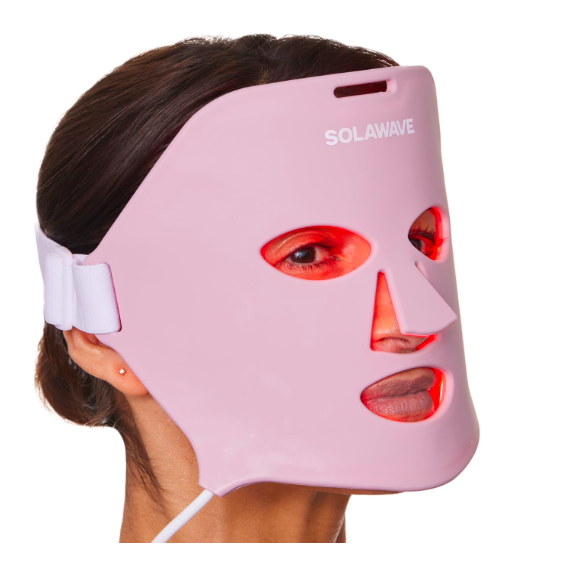
The Solawave Red Light Therapy Mask is a wearable, full-face device that combines red and near-infrared light, the same wavelength range studied for collagen support and inflammation reduction. Its flexible design covers the cheeks, jawline, and forehead at the same time, delivering even light exposure across the whole face in a single session.
A typical session runs ten to twenty minutes. The hands-free format allows it to fit into an existing routine, such as during a wind-down period before bed or while doing other tasks at home.
Solawave Red Light Therapy Mask
Full-face · red + near-infrared · 10–20 min sessions
View the Solawave Mask on Amazon4-in-1 Red Light Therapy Wand
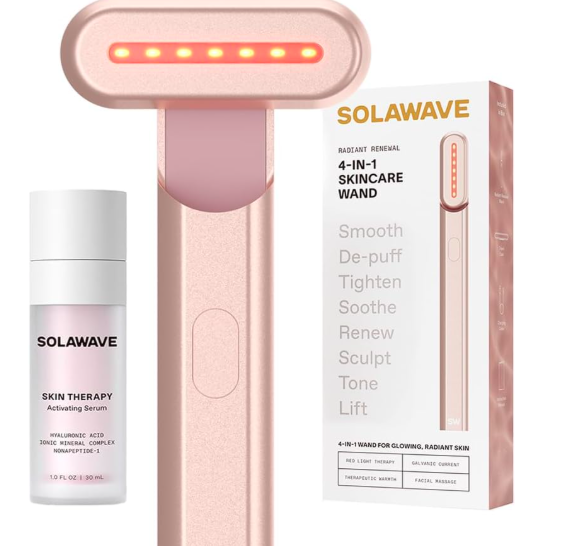
The Solawave 4-in-1 Wand takes a handheld approach. It combines red light therapy with gentle heat, facial massage, and skin-safe microcurrent in one tool, paired with an activating serum that helps the device glide across the skin during use.
The wand is designed for targeted application, moving across specific areas of the face such as the eyes, jawline, or forehead. The added microcurrent function is built to work the facial muscles directly during use, alongside the red light exposure.
Solawave 4-in-1 Radiant Renewal Wand
Red light · warmth · microcurrent · massage
View the Solawave Wand on AmazonSetting Realistic Expectations
Red light therapy is not a replacement for retinoids, sunscreen, or a solid skincare foundation. It works alongside those things, not instead of them. Think of it as an amplifier for the skin's own repair processes rather than a fix in itself.
Results also vary by skin type, consistency, and starting point. Someone dealing with mild redness or early fine lines will likely notice changes faster than someone targeting deep-set wrinkles. Patience matters here more than intensity.
The safety profile is one of the strongest arguments in its favor. Red light does not carry the DNA-damaging risks associated with UV exposure from the sun or tanning beds. The FDA has cleared multiple red light devices for at-home use, including masks aimed at treating visible signs of aging.
Disclosure: This article contains affiliate links. If you purchase through our link, we may earn a small commission at no extra cost to you.
Frequently asked questions
Skincare · July 29, 2026
Shark CryoGlow Plus vs CurrentBody LED Mask
red lightskincaredeviceReadSkincare · September 30, 2026
CurrentBody Series 3 vs Series 2: Is the Upgrade Worth It?
red lightskincaredeviceReadSkincare · July 30, 2026
CryoGlow vs CryoGlow Plus vs CurrentBody LED Masks
red lightskincaredeviceReadSkincare · July 29, 2026
Shark CryoGlow vs CryoGlow Plus: What's Different
red lightskincaredeviceRead